
 By Guthix Danis
Intermittent electrical faults are among the most challenging problems technicians and vehicle owners encounter. Unlike consistent failures, these issues appear unpredictably and often disappear during inspection. A malfunctioning power window that works again without warning, a dashboard warning light that turns off before testing begins, or a vehicle that occasionally refuses to start can all point to intermittent electrical faults.
Efficient diagnosis requires a structured approach, the right tools, and an understanding of how modern vehicle electrical systems operate. By applying systematic troubleshooting strategies, technicians can isolate these faults faster and prevent repeated misdiagnosis.
Understanding how intermittent failures develop is the first step toward solving them reliably.
What Makes Intermittent Electrical Faults Difficult to Diagnose
Intermittent electrical faults differ from permanent failures because they do not remain active long enough for straightforward testing. These faults often result from unstable electrical connections, environmental factors, or component wear that only affects performance under specific conditions.
Common reasons intermittent faults are difficult to detect include:
- Temporary loss of electrical continuity
- Heat-related component expansion
- Moisture intrusion
- Vibration-related wiring movement
- Connector corrosion
- Loose ground points
Because these faults appear inconsistently, technicians must rely on observation patterns rather than single test results.
Recognizing when symptoms occur is often as important as identifying what symptoms occur.
Identifying Common Symptoms of Intermittent Electrical Problems
Electrical faults rarely appear without warning signs. Drivers frequently notice subtle symptoms before a complete failure develops.
Typical indicators include:
- Flickering interior or exterior lights
- Random dashboard warning messages
- Inconsistent sensor readings
- Sudden accessory shutdown
- Temporary loss of infotainment functions
- Unpredictable starting issues
Tracking when these symptoms appear helps narrow down the possible causes.
For example, faults triggered by engine heat often appear after extended driving, while vibration-related faults may occur only during acceleration or rough road conditions.
Documenting symptom patterns improves diagnostic efficiency significantly.
Using a Structured Diagnostic Strategy
Efficient troubleshooting begins with a repeatable process rather than random testing.
A structured diagnostic approach typically includes:
- Confirming the complaint
- Reproducing the condition if possible
- Reviewing wiring diagrams
- Inspecting connectors visually
- Testing voltage supply stability
- Checking ground integrity
- Monitoring circuit continuity
Following a logical sequence prevents unnecessary part replacement and reduces diagnostic time.
Consistency in approach is especially important when faults disappear during testing.
Inspecting Connectors and Wiring Harnesses First
Loose connectors are one of the most common causes of intermittent electrical failures.
Technicians should begin by examining:
- Connector locking tabs
- Terminal pin tension
- Corrosion presence
- Moisture contamination
- Wire insulation damage
Even minor connector movement can interrupt electrical continuity.
Wiring harnesses routed near moving components or high-heat areas are particularly vulnerable to intermittent faults.
Careful visual inspection often reveals issues that electronic testing alone cannot detect.
Ground Circuits Are Frequent Sources of Intermittent Failures
Ground connections are essential for stable electrical operation. Weak ground paths create unpredictable circuit behavior that may resemble component failure.
Common ground-related symptoms include:
- Multiple unrelated warning lights
- Dim lighting conditions
- Erratic sensor signals
- Inconsistent module communication
Technicians should verify ground quality by checking resistance between ground points and the battery negative terminal.
Cleaning corroded ground locations often restores proper circuit function immediately.
Ground integrity checks should always be part of the early diagnostic process.
Using Multimeters Effectively During Intermittent Fault Diagnosis
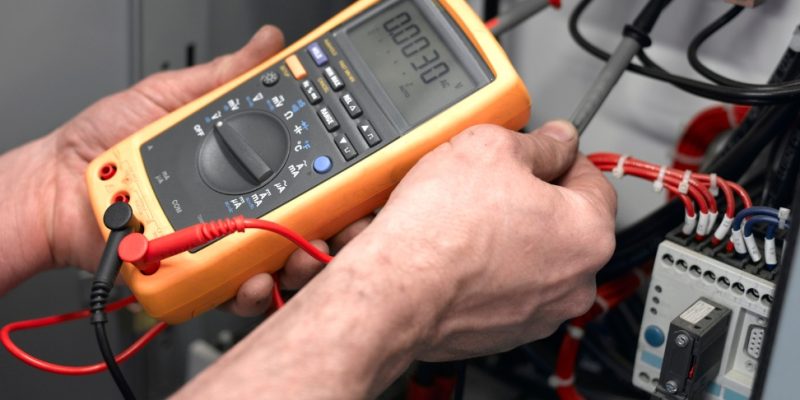
Digital multimeters remain one of the most valuable tools for diagnosing electrical issues.
Technicians use multimeters to measure:
- Voltage supply stability
- Circuit resistance
- Continuity integrity
- Voltage drops under load
Voltage drop testing is especially useful for identifying hidden wiring resistance that cannot be detected through simple continuity checks.
Testing circuits while components are operating under load increases the likelihood of detecting unstable electrical connections.
Static testing alone may not reveal intermittent faults.
Oscilloscopes Provide Advanced Diagnostic Insight
Oscilloscopes allow technicians to observe electrical signals in real time rather than relying only on static measurements.
They are especially useful when diagnosing:
- Communication network faults
- Sensor signal interruptions
- Ignition system irregularities
- Control module response timing issues
Oscilloscope waveforms reveal momentary signal disruptions that multimeters cannot capture.
Advanced diagnostics often depend on waveform analysis to identify short-duration electrical interruptions.
This capability significantly improves diagnostic accuracy.
Performing Wiggle Testing to Identify Hidden Wiring Issues
Wiggle testing is a practical technique used to reproduce intermittent faults caused by wiring movement.
This method involves gently moving wiring harness sections while monitoring circuit performance.
Technicians should observe:
- Voltage fluctuations
- Signal interruptions
- Warning indicator activation
- Component response changes
If symptoms appear during harness movement, the fault location can often be narrowed quickly.
Wiggle testing is particularly effective for diagnosing faults related to vibration-sensitive wiring damage.
Careful handling prevents additional wiring stress during testing.
Monitoring Temperature Effects on Electrical Components
Temperature changes can influence electrical circuit behavior significantly.
Some intermittent faults occur only when components reach specific operating temperatures.
Examples include:
- Sensor failures during engine warm-up
- Module shutdown after extended driving
- Connector expansion affecting terminal contact
Technicians may use heat guns or cooling sprays to reproduce temperature-related faults safely.
Controlled temperature testing helps confirm whether thermal expansion contributes to circuit instability.
Understanding temperature influence reduces diagnostic guesswork.
Checking Fuse Boxes and Relay Operation
Fuse boxes and relays play critical roles in maintaining stable electrical distribution.
Loose relay contacts or partially failing fuse terminals can cause intermittent circuit interruptions.
Inspection should include:
- Fuse seating condition
- Relay switching response
- Terminal corrosion presence
- Connector housing stability
Swapping relays with identical known-good units can quickly confirm relay-related issues.
Reliable power distribution is essential for accurate electrical diagnosis.
Fuse panel inspection should never be overlooked.
Using Scan Tools to Detect Hidden Electronic Issues
Modern vehicles rely heavily on electronic control modules that communicate across multiple network systems.
Scan tools allow technicians to monitor:
- Stored diagnostic trouble codes
- Communication network status
- Module response timing
- Sensor performance data streams
Intermittent faults often leave temporary diagnostic records even when symptoms disappear.
Monitoring live data helps identify irregular signal behavior before faults become permanent.
Advanced scan tools improve diagnostic speed and accuracy.
Environmental Factors That Trigger Intermittent Electrical Faults
Environmental conditions frequently contribute to unstable electrical performance.
Common influences include:
- High humidity levels
- Road salt exposure
- Temperature fluctuations
- Dust contamination
- Engine vibration stress
Vehicles operating in harsh climates often develop wiring connector corrosion earlier than expected.
Recognizing environmental influences helps technicians prioritize inspection areas more effectively.
Environmental awareness improves troubleshooting efficiency.
Preventing Repeat Electrical Failures After Repairs
Fixing intermittent faults requires confirming long-term circuit stability after repairs are completed.
Technicians should perform:
- Load testing verification
- Connector retention checks
- Harness routing inspection
- Ground cleaning procedures
- Protective insulation replacement if needed
Ensuring repairs address root causes prevents repeated failures later.
Preventive measures improve system reliability and customer satisfaction.
Reliable electrical repairs depend on both diagnosis and verification.
Building Efficient Diagnostic Habits Over Time
Technicians who diagnose intermittent faults efficiently rely on experience combined with structured testing strategies.
Effective habits include:
- Documenting symptom patterns carefully
- Testing circuits under operating conditions
- Verifying ground stability early
- Inspecting connectors before replacing components
- Using advanced diagnostic tools when necessary
Consistent diagnostic habits reduce unnecessary part replacement and improve repair accuracy.
Developing a methodical approach strengthens long-term troubleshooting success.
FAQ Section
Why do intermittent electrical faults often disappear during testing
Movement of wiring harnesses, temperature changes, or connector repositioning during inspection can temporarily restore electrical continuity.
Can battery condition cause intermittent electrical system behavior
Yes. Weak batteries or unstable voltage supply can create unpredictable module responses and accessory operation issues.
Are intermittent faults more common in older vehicles
They are more frequent in older vehicles due to insulation aging, connector wear, and corrosion exposure over time.
How long should technicians monitor circuits when diagnosing intermittent faults
Monitoring should continue long enough to reproduce operating conditions where symptoms normally occur, including temperature and vibration changes.
Can aftermarket accessories cause intermittent electrical problems
Improper accessory installation may introduce wiring stress or circuit overload conditions that lead to unstable electrical performance.
Do intermittent faults always trigger diagnostic trouble codes
No. Some faults occur too briefly to register permanent codes, which makes live data monitoring especially important.
Is replacing components without testing a reliable solution for intermittent faults
Component replacement without confirmation often leads to repeated failures because wiring or connector problems are frequently the true cause.